The Story
Early Inspiration
Born in Akron, Ohio, in 1957, I was captivated by music from a very young age. When I was five, my parents bought a stereo console, and I would literally press my ear against one of the speakers, trying to be “inside the music.”
I first heard The Beatles in 1964 and asked my dad to buy me a cymbal so I could play along. He said no, so I told him I would use a garbage can lid instead.
Mick Jagger came next, with “Satisfaction” in 1965, and by 1967, Jefferson Airplane, Cream, The Doors, and Jimi Hendrix were filling my head with amazing music.
Woodstock happened in 1969, the same year my recently divorced mom, who was struggling to raise three young boys, bought me my first drum set from the JCPenney catalog for $110—a fortune at the time. I was 12, and that was a life-changing gift. I quickly learned to play most of the “Are You Experienced” album, and every young rock drummer's dream, the drum solo from “In-a-Gadda-Da-Vida”. Oh yeah………
Teenage Years and the Band Life
By the time I was 14, I was one of the main “hippies” at school—hair down to my shoulders and playing in a rock band with friends. We performed at parties, the local youth center, and in “battle of the bands” competitions. Within a year, I got recruited by another band looking for a drummer and “Catapult” was formed. Ron Hazelett played keyboards, Chris Henderson played bass, and Harold Weese did vocals.
I got a second used drum set, combined it with my first set, and Chris refinished all my drums in Naugahyde for a very groovy look. My setup surrounded me: two bass drums, a snare, four mounted toms, two floor toms, a hi-hat, and four large Zildjian cymbals. Pretty cool stuff for a 15-year-old wearing crushed-velvet, tie-dyed bell-bottoms with matching satin shirts— very stylish.
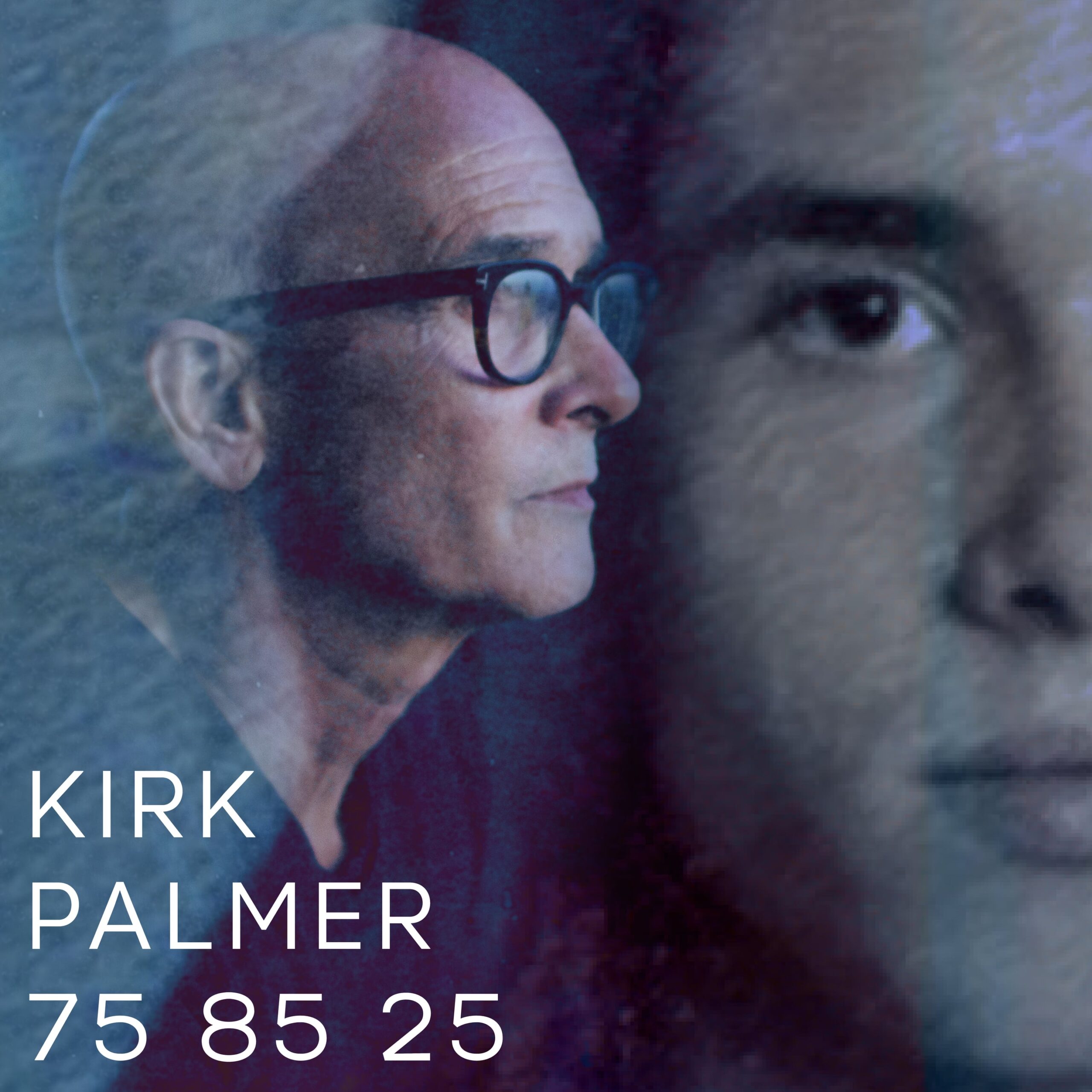
We played songs by Deep Purple and Uriah Heep, along with plenty of originals. We weren’t great, but we weren’t terrible. Highlights included playing for our full high school and playing our final gig at Kent State University when I was 18. Two of our songs, “Brain Stealers”, and “The Water Song” were (poorly) recorded in my living room in 1975 and are included on my album, “Kirk Palmer 75 85 25”.
By that time, my musical tastes had evolved toward Pink Floyd, Emerson, Lake & Palmer, Yes, The Moody Blues, and Genesis. I’m not sure if the term “progressive rock” existed yet, but that big, rich, complex, orchestral sound with classical overtones completely captivated me, and would strongly influence the next stop in my musical journey.
From Music to Business
While music had been a big part of my life, I worked a ton of jobs at a young age to support myself and my family. From 14 to 17, I was a car washer, lawnmower, caddy, roofer, candlemaker, dishwasher, paper bundler, newspaper delivery boy, and a sales associate. I didn’t care much for school, but in my senior year, the school opened a first-of-its-kind video studio, several years before consumer video was available.
In 1974, Chuck Brazik, the Training Director of O’Neil’s department store in Akron, asked Fred Palcho, my high school teacher, to use the studio to create a videotape supervisory skills training program. I ended up being the guy who produced those tapes. Upon graduation, Fred left teaching to open his own video company, and build his own video studio. Multi Video Services was born, and I became Fred’s “partner”. O’Neil’s was our client, and in 1976, I was hired to build a video studio for them and make training tapes, which launched my retail career. I produced videos to teach employees how to operate cash registers, develop selling skills, take inventory, etc. I also decided we could use video to sell products to customers, and I credit myself with creating the first-ever point-of-sale video in 1975. I wrote, produced, and acted in a Pet Rock video, and we sold out our 10,000-rock supply in a single weekend.
I moved from O’Neil’s to a sister division, May Co California in 1979 to become a college recruiter. In 1981, I moved to Gimbel’s in Philadelphia, and two years later, to Gimbel’s in New York. I then went to The Limited in Columbus, Ohio, and finally back to New York with Lane Bryant, part of Limited, Inc. This all happened between 1979 and 1987, when I started our executive search firm, Kirk Palmer & Associates.
Rediscovering Creativity
When I moved from L.A. to Philadelphia in 1981, I was 24 and Training Director at Gimbel’s Philadelphia, earning $30,000—a lot for a young, single guy without a college degree. Wanting a wife and family, I decided buying a four-bedroom home on the Main Line outside Philly would do the trick. It didn’t.
To say I was house-poor would be an understatement. A friend and his wife, who had also moved nearby, owned a piano. I started fiddling around on it and discovered I could make music come out of my brain and onto the piano, with no training. I wasn’t good, but it was exciting to create melodies and chords from scratch. The foundation for the song “Walked Out the Door” began on that piano.
Early Home Recording
In 1983, Gimbel’s Philadelphia merged with Gimbel’s New York. I sold my house, moved into downtown Philly with a friend, and commuted daily by Amtrak to Gimbel’s NY for a year. Synthesizers were becoming affordable, and I was enthralled by the idea of having an orchestra at my fingertips. Between 1983 and 1984, I bought a Sequential Circuits synthesizer, an Ensoniq Mirage digital sampler, an E-mu drum machine, a small soundboard, and a four-track cassette recorder. I didn’t know how to write, play, or record—but I learned, experimenting until I could finally capture the music in my head on tape.
I joined The Limited in Columbus, Ohio, in May 1984 and stayed for six months before transferring back to New York to work for its Lane Bryant division. By 1985, I owned a studio apartment in West New York, New Jersey. I bought an Ensoniq ESQ-1 synthesizer, an eight-track Tascam mixing board, and an eight-track Tascam reel-to-reel recorder, and taught myself to mix. I recorded my earlier songs, wrote and performed new ones, and hired 21-year-old Carol Veigh to sing on several tracks. Six of those songs were recorded in that studio apartment.
Other than playing “The Hallelujah Song” at my wedding in 1990, I never shared my music with anyone outside a few friends and family. These original mixes are now included on the album Kirk Palmer 75 85 25.
A New Chapter: 2010 and Beyond
It’s 2010. I’m sitting in my office of 500 Fifth Avenue in NYC. My walls were lined with 41 record album covers, mostly from the 1970s – most with fantastic album artwork, or pictures of my favorite rock stars. I was on a call with Jim Petty, then President of Retail at Carter’s, and we started talking about our shared appreciation of progressive rock music. I told him I felt stuck in the 70s and was looking for something new to listen to. He said, “Have you ever heard of Porcupine Tree?” I said, “Porcupine what?” Long story short—I listened, became obsessed, saw them live at Radio City Music Hall in 2010, and this began a new musical journey.
My staff got me a signed set of items from the band for Christmas, and I asked how they managed that. It turned out that, although the band was British, their manager, Andy Leff, was from New York. They explained that their CEO boss was a big Steven Wilson and Porcupine Tree fan, and they wanted to surprise him with some signed stuff. Andy and I connected and became friendly, just as Steven was launching his solo career. Andy got me backstage for a few of his NY shows in 2011 and 2012, as his solo band toured with a new lineup, including former Miles Davis keyboard player Adam Holzman, who also lived in NY.
I kept in touch with Andy and, in 2013, helped his wife with some job advice. As a thank-you, I was invited to a studio playback session for Steven’s new album “The Raven That Refused to Sing”, at Avatar Studios. There, I met Adam Holman’s wife, Jane Getter, who was also a musician preparing to release a new album. I offered to become the executive producer for her project. She assembled an extraordinary lineup of musicians, including Adam, and we recorded “On” in 2014. It was a dream come true for a boy from Ohio—producing an album at one of New York’s top studios with some of the best musicians in the world.
The Reimagining
Jane, Adam, and I became friends and got together whenever they were between tours. Adam was busy touring with Steven’s band for several years, had some time off in 2017, and wanted to record a new solo album. I was honored to serve as executive producer for Adam’s album as well—Truth Decay, released in March 2018.
We recorded and mixed it at Spin Studios in Long Island City. I remember standing with Adam in the stairwell during a break and deciding to play him a snippet of my old song “7/5” from my iPhone. I asked if he thought he could do anything with it. He generously agreed to reimagine “7/5” (which should have been called “7/4,” the correct time signature), and I was thrilled with his version of the song. But I really wanted to hear what it would sound like with live drums, so in 2022, Adam’s incredibly talented son, Russell Holzman, recorded the drum tracks. Once those were in place, the lack of a real bass line was clear. In 2024, the amazing Bryan Beller—whom I’d met working on Jane Getter’s album—added bass. “7/4” was completed in 2024, and Adam did a final remix in early 2025.
I then asked Adam to reimagine two more songs: “Our Son” and “Walked Out the Door.” He agreed and completed them in 2025. Bryan Beller again played bass, Steven Wilson’s drummer Craig Blundell—whom I’d first met in 2016—handled drums, and the remarkable Chanda Rule, based in Lisbon, performed vocals. These three reimagined versions of the original 1985 recordings are included on the album Kirk Palmer 75 85 25.
The album title reflects the years the music was created: 1975 for the two Catapult songs, 1985 for the six core recordings, and 2025 for the three reimagined songs.
Russell Holzman led this project to completion in late 2025, with help from Jason Park (final mixing), Ronan Park (artwork), and Rob Skarin (website design). To everyone involved along the way – I thank you.
I hope this story and project brings a smile to you all!